
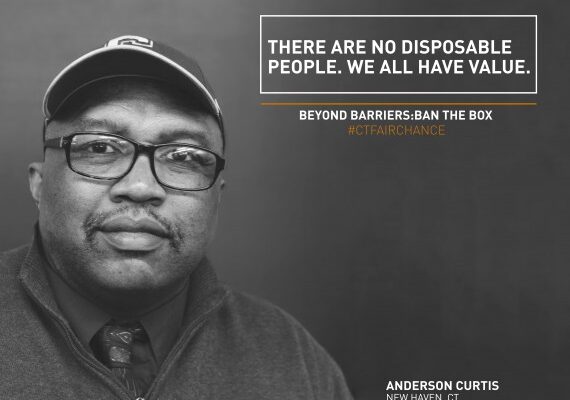
By giving people who have made mistakes a fairer chance to earn a job, the Connecticut Fair Chance Employment Act takes steps to make our state more just and equal. As the ACLU of Connecticut has testified, it has the potential to change lives. Advocates like Rafael, Nelson, Anderson, and Jonathan are speaking out to share their stories. They are people of faith, fathers, grandfathers, neighbors, business owners, and friends. We sat down to ask them for their "six word memoirs" about what "justice" and Fair Chance Employment mean to them. Here is what they had to say:
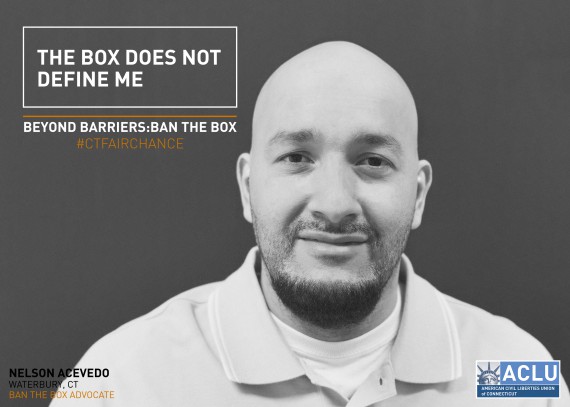
Portrait of Nelson, advocate for fair chance employment / ban the box in Connecticut

Nelson is a father, a person of faith, and an advocate.
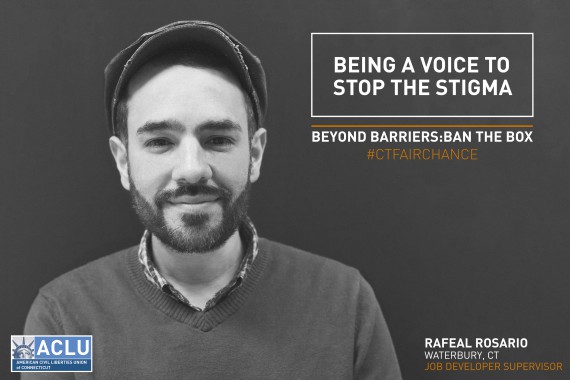
Portrait of Rafael, advocate for fair chance employment / ban the box in Connecticut

Rafael is a counselor, friend, and neighbor.
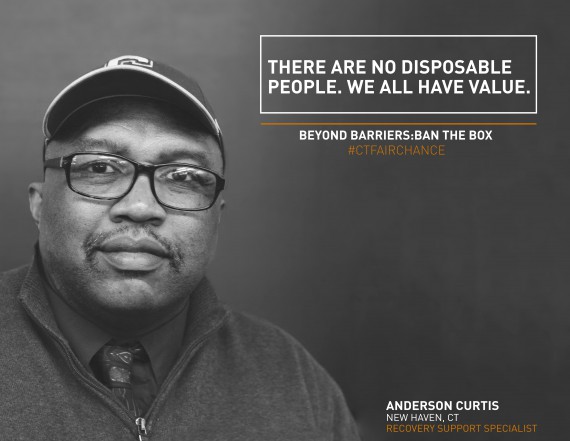
Portrait of Anderson, advocate for fair chance employment / ban the box in Connecticut

Anderson is a person of faith, grandfather, advocate, recovering addict, and returning citizen.
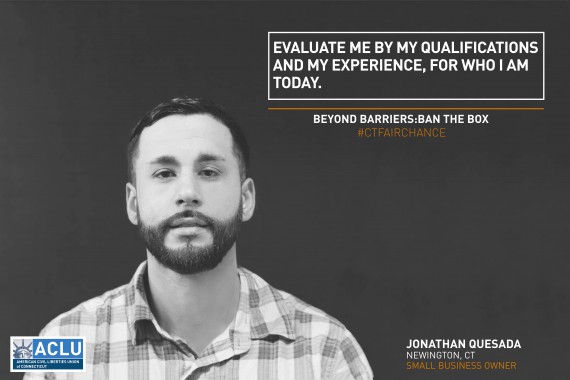
Portrait of Jonathan, advocate for fair chance employment act / ban the box Connecticut

Jonathan is a father of four children, a home improvement contractor, and an advocate.

Related Content

Anderson Curtis, a Black man wearing a purple shirt, smiles at the camera in front of a blue wall.
  • Smart Justice

Anderson Curtis

Senior Policy Organizer
he, his
Anderson Curtis serves as senior policy organizer for the American Civil Liberties Union of Connecticut (ACLU-CT). In his role, Anderson’s primary responsibilities include mobilizing ACLU-CT members, recruiting and developing campaign leaders who have been directly impacted by the criminal legal system and police violence, engaging Connecticut voters, and leading the ACLU-CT’s public education efforts. Anderson is a proud alumnus of Gateway Community College Drug and Alcohol Recovery Counselor (DARC). He completed the Community Leadership Program Cohort 24. Anderson’s passion for change is fueled by his lived experience of 20 years on the treadmill of moving in and out of the criminal legal system. After 14 years of seeking paths of healing and freedom, Anderson lives with hope and dignity, advocating for people to access employment and housing despite the barriers of discrimination and disparities.
Legislation
Mar 16, 2018
Placeholder image
  • Criminal Legal System

H.B. 5320, An Act Concerning Occupational Licensing and Building Trades

The ACLU of Connecticut encourages the legislature to direct the Commissioner of the Department of Consumer Protection to create rules that ensure fair occupational licensing for people with criminal records.
Status: Pending
Position: Support
Resource
Placeholder image

Campaigns

News & Commentary
May 15, 2016
Placeholder image

7 Ways Connecticut Could Become More Equal, Just & Free in 2016

The ACLU of Connecticut spoke out in support of liberty, justice, and equality during the 2016 legislative session. In the end, the legislature passed--and Governor Malloy signed--seven new bills into law. These new laws to advance civil liberties would: spearhead a study to improve police training; prevent the state from detaining juveniles for more than seven days without a hearing and require closure of two juvenile detention facilities; require the Department of Correction to create a plan to reduce negative mental health effects on youth in correctional facilities; create fair chances at employment for people with criminal records; add protections for religion, national origin, sex, sexual orientation, and gender identity or expression for people who serve in Connecticut's military departments, such as the National Guard; protect student privacy by preventing people from tracking students' data and limiting how school-contracted groups can collect or share students' information; and increase cellphone privacy protections.