News & Commentary

Dec 20, 2021
Twelve goals for 2022
As we close the book on 2021, we’re ready to look ahead to 2022. Here (in no particular order) is what the ACLU of Connecticut is looking toward in court, in communities, and during the legislative session.
By David McGuire

Dec 02, 2021
Welcoming Amber Vlangas
The ACLU of Connecticut is proud to welcome welcome Amber Vlangas as our donor relations officer.

Nov 15, 2021
Welcome Jess Zaccagnino, the ACLU-CT’s new policy counsel
As a firm believer in advocating for human rights, Jess Zaccagnino has driven her fellow students to the polls as an undergraduate, published research about authoritarianism as a law student, and pursued equity legislation at the state capitol here in Hartford. Jess recently joined the ACLU of Connecticut as our new policy counsel. In her role, Jess will promote justice, liberty, and equity through legislative policy research, analysis, drafting, and advocacy. She’ll be working with the rest of the ACLU-CT team to execute our legislative agendas, engage with administrative agencies and local government bodies, and to act in solidarity with our fellow advocacy organizations to advance shared goals.

Oct 22, 2021
Smart Justice talks organizing, solidarity, and parking lot advocacy in virtual event
"Organizing is a critical vehicle to ensuring that directly impacted people are centered in all parts of policymaking."
Oct 14, 2021
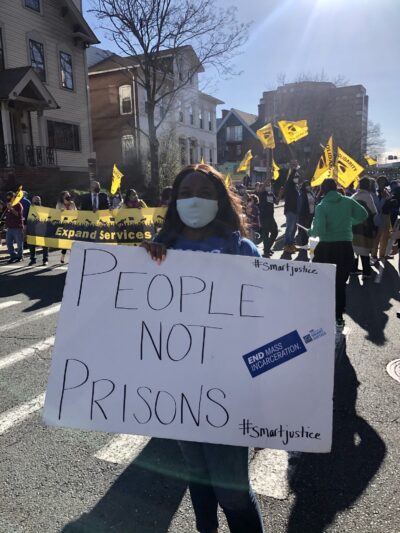
Three things that must happen when a prison closes
Closure is just the first, minimum step. Any time Connecticut closes a prison, the state must also do these three things.
By Anderson Curtis, Claudine Constant, Gus Marks-Hamilton
Oct 07, 2021
Connecticut’s first inspector general has a lot to prove
We need a robust Inspector General pursuing police accountability, and the challenges facing this role make clear that local and statewide elected officials also need to do more.
By Claudine Constant
Sep 24, 2021
15 Questions for the People Trying to Become CT’s First Inspector General
Here's what the four finalists had to say about police accountability and racial justice.
Sep 20, 2021
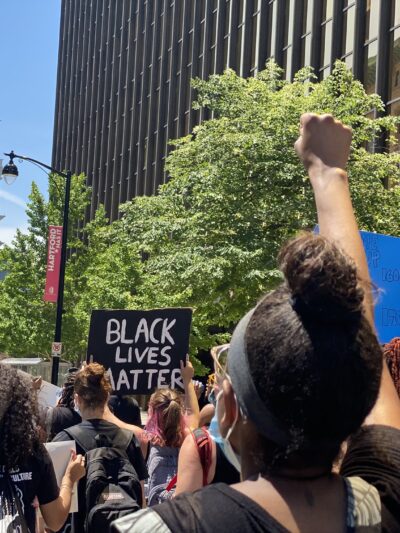
Connecticut’s first Inspector General must be ready to hold police accountable
Justice would be people never being hurt or killed by police in the first place, ending systemic racism, and reallocating policing budgets to instead go to things that create real public safety. But police accountability is also necessary, and the Inspector General must be prepared to seek it.
Stay Informed
Sign up to be the first to hear about how to take action.
By completing this form, I agree to receive occasional emails per the terms of the ACLU’s privacy statement.
By completing this form, I agree to receive occasional emails per the terms of the ACLU’s privacy statement.