Criminal Legal System
We address the front end – policing and prosecutors – and back end – the carceral system and its collateral consequences – of the criminal legal system.
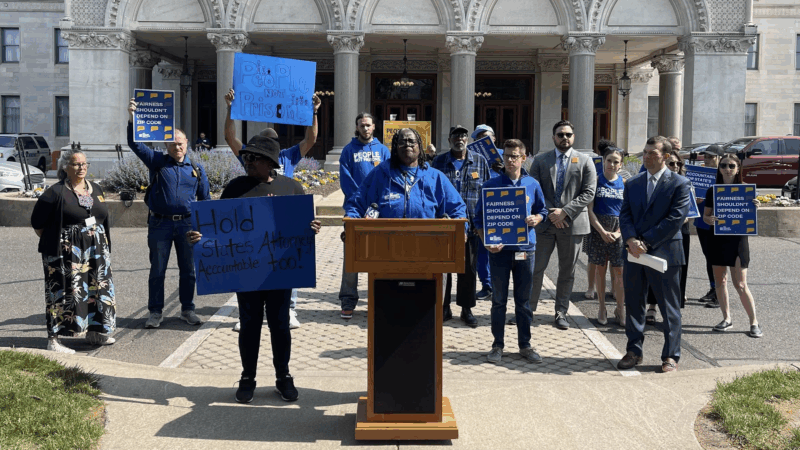
The ACLU of Connecticut was at the forefront of the successful efforts to repeal the death penalty in Connecticut, end cash-only bail for people charged with misdemeanors, eliminate over-zealous "drug-free" zones that ensnared people in the criminal legal system, and prevent civil asset forfeiture. We helped to lift up the voices of formerly incarcerated people to push for the Connecticut Fair Chance Employment Act, which "banned the box" on initial job applications, and we continue to advocate for the end of solitary confinement and the creation of a society where all people have the opportunity to support themselves and their families after incarceration. Our legal team sought help from the United Nations to stop our state's Department of Corrections from force-feeding an incarcerated person and secured religious observance rights for people incarcerated at the Danbury Federal Correctional Institution. Our Smart Justice campaign, grounded in the leadership of justice-impacted people, has been at the forefront of pushing to create world where people are free from the collateral consequences of incarceration, where all of us are safe and able to thrive.
Through our two criminal legal system strategic priorities, we address the front end – policing and prosecutors – and back end – the carceral system and its collateral consequences – of the criminal legal system. Racial equity cannot be realized within a system that disproportionately harms families and communities of color, and furthermore, our criminal legal system promotes neither justice nor safety. Ultimately, we seek to end mass incarceration and eliminate racial disparities within Connecticut’s criminal legal system.
On the front end of the system, we challenge the actors and systemic factors that cause violence to our communities by funneling people into the criminal legal system. We work to reduce the role, scope, tactics, and power of police. We promote the reallocation of funding from policing to instead go to programs and services that advance public health and safety by creating thriving communities. We are proactive in holding police and prosecutors accountable for their racist, harmful, and unconstitutional actions. We seek to expose the racism caused and perpetuated by gatekeepers to the criminal legal system, such as police and prosecutors; to increase access to open records; to promote meaningful evaluations for State's Attorneys and other prosecutors; to create consequences for police who perpetuate violence; to reduce the role, power, and scope of policing; and to move money out of policing and prisons and instead into the programs and services our communities need to be healthy, safe, and thriving.
Meanwhile, we also challenge the back end of the criminal legal system – the actors and systemic factors that cause violence to our communities by imprisoning people in unhealthy prisons and jails and by creating lifetime collateral consequences for anyone living with a criminal record. We work to ensure that people living with a criminal record are not discriminated against and have equitable access to housing, education, and employment. The ACLU of Connecticut will address the front end and back end of the criminal legal system by educating people about the human and financial costs of policing and incarceration, fighting to end prison debt, advocating to elimate barriers to reentry and collateral consequences of living with a record of arrest or conviction, and seeking harm reduction by advocating for humane prison conditions.
The Latest
Connecticut State Police Fake Traffic Ticket Scandal

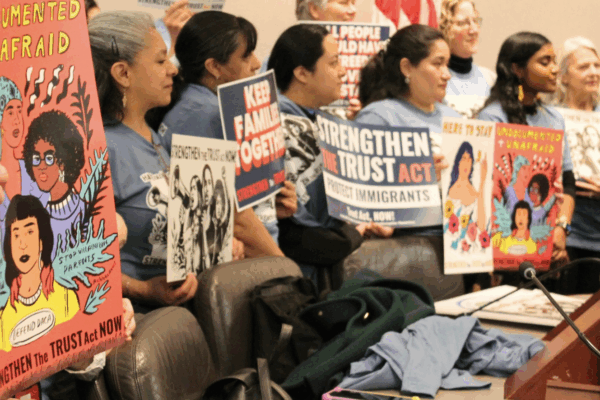
Reflecting on the 2025 Legislative Session
Cases, Campaigns & Legislation
S.B. 397: An Act Concerning Democracy and Government Accountability
H.B. 7132: An Act Concerning Non-Safety Related Traffic Stops
H.B. 6948: An Act Concerning the Collateral Consequences of a Criminal Record on Housing Opportunities
Stay Informed
Sign up to be the first to hear about how to take action.
By completing this form, I agree to receive occasional emails per the terms of the ACLU’s privacy statement.
By completing this form, I agree to receive occasional emails per the terms of the ACLU’s privacy statement.