At the close of this legislative session, there is something worth recognizing: Connecticut moved forward.
Not perfectly. Not all at once. But meaningfully.
This year’s session unfolded during a moment of deep uncertainty nationally — one marked by growing attacks on civil liberties, increasing government overreach, and rising fear within communities across the country. Like many advocates and organizations, the ACLU of Connecticut entered the session knowing that the stakes were high. What followed was months of coalition work, advocacy, testimony, organizing, and community pressure that helped move important protections forward for people across our state.
And while there is still much more work ahead, this session delivered real progress.
Expanding Access to Democracy
For years, Connecticut has remained one of only a handful of states that required voters to provide a specific excuse to vote mail-in. That reality never reflected how people actually live.
Work schedules change.
Childcare falls through.
Health concerns arise.
Transportation can be unreliable.
Now, after more than a decade of work, Connecticut residents are able to vote in person, by mail and before election day.
With the passage of mail-in voting, Connecticut is finally taking a long-overdue step toward making voting more accessible and reflective of real life. Voters will no longer need to justify why they are requesting an mail-in ballot, a change advocates have fought for over more than a decade.
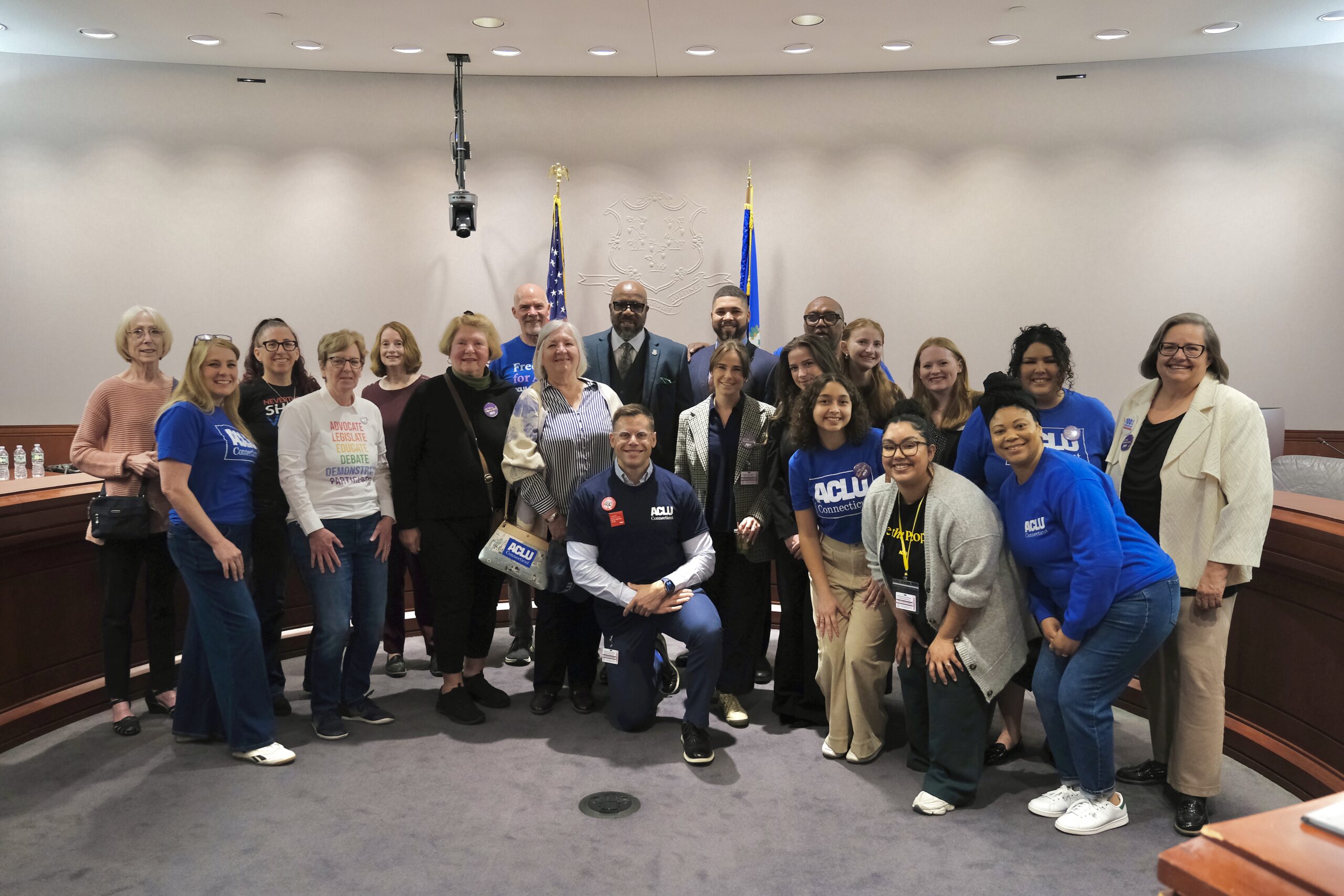
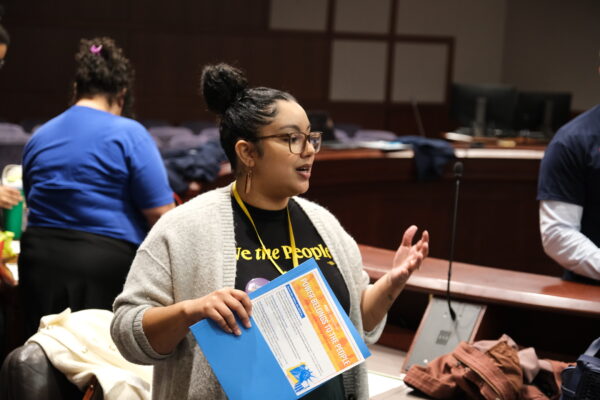
House Bill 5001 waited until late in the legislative session to be called, a reminder of how uncertain even long-advocated-for reforms can be. But sustained advocacy made the difference. From community members showing up to testify, to coordinated advocacy days that brought voices directly to legislators, the momentum built steadily and ultimately carried the bill across the finish line.
This matters because access to democracy should not depend on whether someone can take time off work, arrange childcare, or navigate unnecessary barriers simply to cast a ballot.
And while this victory is significant, we also know the work is not finished. Voters will still need to apply for an mail-in ballot for each election, rather than being able to opt into a more streamlined system. Progress rarely happens overnight, but this moment marks an important shift toward a more accessible democracy in Connecticut.
What Does House Bill 5001 Do?
- Allows Connecticut voters to request a mail-in ballot without needing a specific excuse.
- Provides safeguards against ICE agents at polling locations in the event that civil rights are violated.
- Expands access to voting for people balancing work, caregiving, health needs, and other responsibilities.
- Modernizes Connecticut’s voting system to align with the majority of states.
- Helps reduce barriers that have historically impacted low-income voters, Black and brown communities, older adults, and people with disabilities.
Protecting Privacy, Accountability, and Communities
This session also brought important progress on government accountability, surveillance protections, and protections for immigrant communities through the passage of Senate Bill 397.
At a time when surveillance technologies are expanding rapidly and communities across the country are increasingly concerned about how personal information is collected and shared, these protections matter deeply.
Senate Bill 397 strengthens pathways for accountability when constitutional rights are violated by federal agents, establishes limits around automated license plate reader (ALPR) surveillance and data-sharing practices, and reinforces protections from civil immigration enforcement for sensitive locations like schools and healthcare settings. These measures are necessary for immigrant communities, who should be able to access essential services without fear. They are necessary for people seeking reproductive care, who should be able to receive medical care without fear. They are necessary for Black and Brown people, who already face disproportionate impacts from being over-surveilled and over-policed. They are necessary for young people and students, who should be able to protest without worrying about being tracked by a camera.
The path forward for Senate Bill 397 was not without challenges.
While the bill faced significant debate amongst advocates and elected officials, it made it to the finish line through sustained coalition advocacy. Senate Bill 397 included key provisions — including limits on ALPRs and protections for sensitive locations — were incorporated into a broader legislative package. That collective effort ensured these protections remained part of the final bill, which was passed and quickly signed into law by Governor Lamont.
These protections are not abstract policy debates. They shape whether people feel safe bringing their children to school, accessing healthcare, or moving through their communities without fear that their data or presence could be used against them.
What Does Senate Bill 397 Do?
- Establishes protections and accountability measures when rights are violated during federal law enforcement activity, such as requiring ICE agents to remove masks during interactions with the public.
- Places limits and guardrails on the use and sharing of surveillance data, including automated license plate reader (ALPR) information.
- Keeps ICE out of sensitive locations like schools, healthcare facilities, and places of worship.
- Helps ensure immigrant communities can access essential services without fear.
- Reinforces privacy and civil liberties protections at a time of growing concerns around government overreach and surveillance.
Coalition Work Made These Wins Possible
None of these victories happened in isolation.
Throughout the session, organizations, advocates, directly impacted communities, and coalition partners across Connecticut showed up again and again: testifying, organizing, educating lawmakers, and mobilizing supporters.
The importance of that coalition work remains one of the clearest lessons of this session.
Last year, the ACLU of Connecticut reflected on how rapidly changing political conditions required stronger partnerships and deeper collaboration — that continued this year. The challenges facing our communities are too large for any one organization to take on alone, and this session showed what is possible when people work together with clarity and persistence.

There Is Still More to Do
As meaningful as these victories are, we are clear-eyed about the work ahead.
There are still barriers to remove from our voting system.
There are still gaps in privacy protections.
There are still communities across Connecticut living with fear and uncertainty.
And there are still national efforts underway to erode civil liberties, weaken democratic institutions, and target vulnerable communities.
This session was not the end of the work. It was a reminder of why the work matters.
Looking Ahead
Moments like this are important because they remind us that progress is possible, even during difficult times.
They remind us that sustained advocacy matters. That coalition work matters. That public pressure matters. And that people across Connecticut continue to believe in building a state where rights, dignity, and access are protected for everyone.
As we move beyond this legislative session, the ACLU of Connecticut remains committed to defending civil liberties in the courts, at the Capitol, and in communities across the state.
There is still work ahead.
But this year, Connecticut took important steps forward. And that is worth celebrating.
Thank You
To our members, supporters, coalition partners, and every person who took the time to testify, organize, call lawmakers, attend advocacy days, or speak up in support of these bills — thank you.
These victories belong to all of us.
Your support helped move these protections forward and helped ensure that Connecticut continues to move toward a more accessible, equitable, and accountable future.
As we prepare for the work ahead, we hope you’ll continue to be part of this movement.
Sign up to volunteer with the ACLU of Connecticut.
Support this work with a donation.