News & Commentary
Aug 27, 2020
We need your help to hold the DOC accountable
In March, the ACLU-CT filed a lawsuit on behalf of everyone incarcerated in Connecticut’s prison system, to stem the tide of COVID-19. On July 20th, the United States District Court approved a settlement of the lawsuit. The settlement came into force on the day, and it will expire on December 31st.
By David McGuire

Jul 24, 2020
ACLU-CT position and analysis of house-passed version of LCO #3700, An Act Concerning Police Accountability
After hours of debate, the Connecticut General Assembly house of representatives this morning passed LCO #3700, “An Act Concerning Police Accountability.” The version passed by the house is slightly different than the original bill, which was introduced under a different LCO number (3741).

Jul 22, 2020
What is qualified immunity?
Right now, Connecticut’s legislature is considering a bill that, among other things, would ban “qualified immunity” for police in Connecticut. As a result, the phrase “qualified immunity” is getting tossed around now more than any time we can remember, at least outside of legal circles. In Connecticut courts, qualified immunity is called “governmental immunity.”
Jul 16, 2020
ACLU-CT Testimony Regarding LCO No. 3471, An Act Concerning Police Accountability
Below, you'll find a copy of the ACLU of Connecticut's testimony regarding LCO No. 3471, "An Act Concerning Police Accountability," as introduced. Regardless of what happens next at the legislature, this bill cannot be the end of the conversation.
Jun 26, 2020
State’s Attorney appointments are only the beginning for reshaping prosecution in Connecticut
The first State's Attorney reappointments under new law are a chance for the Criminal Justice Commission to choose new leadership and send the message that prosecution in Connecticut needs to change.
By Kelly McConney Moore

Jun 24, 2020
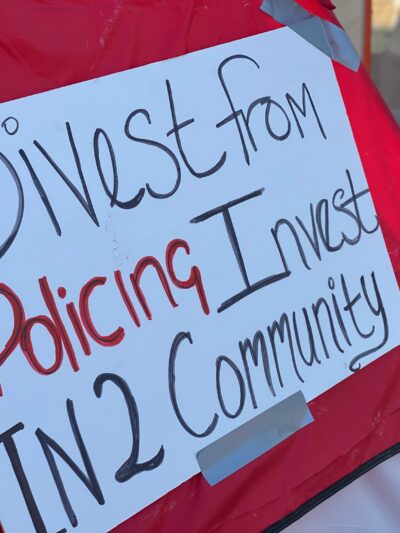
Divestment from policing is close to reality for a lot of people in our state. It should be reality for everyone.
It’s about bigger towns and cities, especially those where policing most harms Black and Latinx people, getting the same chance to do what other Connecticut towns have long done: investing hard-earned resources into schools, healthcare, food security, housing security, and jobs instead of policing.
By Claudine Constant, Melvin Medina
Jun 17, 2020
Policymakers need to listen to activists on the solutions to police violence and racism
This movement has been around since the early days of policing and has always been led by activists and organizers from communities that have been harmed by the police. It’s time people in power listen.
By Kelly McConney Moore
May 21, 2020
Lamont’s “re”opening runs the risk of widening inequities in our state
To understand what Lamont’s choice to add more businesses to the lists of those that have been open could mean for Connecticut, it’s useful to look at what his actions so far have meant for vulnerable people – the people who the government has left open and exposed to COVID-19 from the start.
By David McGuire


Stay Informed
Sign up to be the first to hear about how to take action.
By completing this form, I agree to receive occasional emails per the terms of the ACLU’s privacy statement.
By completing this form, I agree to receive occasional emails per the terms of the ACLU’s privacy statement.